
Subscribe and receive email notifications of new blog posts.
 RSS Feed
26
Homeowners: How to Plan for a Patio Addition
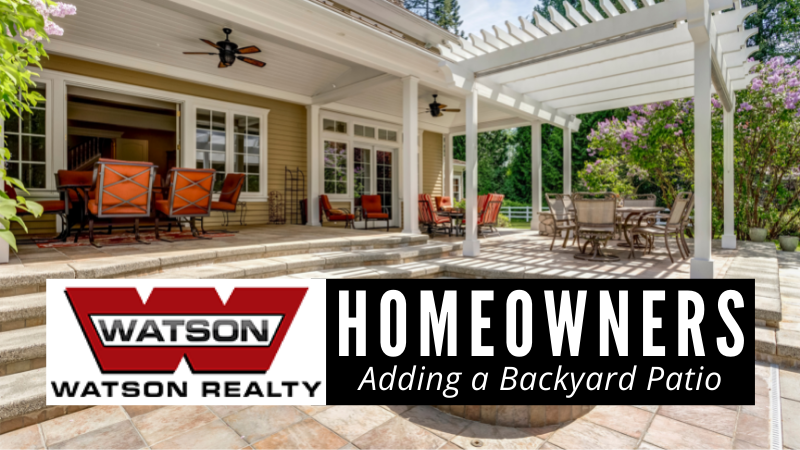
Having a delineated, comfortable space to enjoy the outdoors at home is fundamental. A patio can extend your living area, provide a great place to unwind, help you entertain more, and increase the value of your home. But before you break ground, it's important to do your due diligence. There are many factors in play and many decisions to make when it comes to patio designs, materials, and builders. Proper planning is key to creating a beautiful and functional patio. Here, our agents have outlined some of the key aspects you should consider as you start to create your perfect patio plans.
- Consider the Purpose of Your Patio
Think about how your patio is going to be used on a regular basis. Are you going to be hosting regular barbecues? Will you be preparing family meals outside? Do you intend to have a fire pit on the patio? Are you looking for a comfy place to lounge by the pool? Or, would you rather have a simple, quiet patio big enough for a bistro table and a couple of chairs? Deciding whether your patio will be a gateway space or gathering place will guide you in making the best choices in terms of size, layout, and add-on features. - Pick Your Place
Most patios are accessible to the kitchen, but they need not be. A gateway patio, for instance, can be more remote, toward the back of the property. But if you plan on using your patio for high-use activities like cooking and entertaining, keep it as close to the kitchen as possible for more convenience. Also, consider the position of the sun in your backyard at the time you're most likely to use the patio. - Size it Right
Whether you're planning for a family alfresco area, a cozy space for two, or an outdoor kitchen that can handle a large crowd, size is key. There's no specific rule of thumb as to patio size. Keep in mind, however, that a small patio will feel cramped and an oversized one will not feel intimate. Plan your patio with activity, furniture, and traffic in mind. - Determine the Shape
The shape and style of the patio will set the scene for the mood of the outdoor living space. There are three basic patio styles: symmetrical to the house, asymmetrical, and voluptuous curves. Curved lines tend to provide more visual interest. The surrounding perimeter landscaping and the plants also create the style of your patio. - Account for Drainage
A poorly planned patio can lead to pooling water. Excessive moisture is a major cause of hardscape failure. Consider the grade and lay of the land before you build. Ensure all the necessary building regulations and groundwork are covered. - Choose Color and Materials
Typically, the patio should complement the style and color of your siding. Brick, flagstone, slate, and concrete are some of the most popular patio surfaces. They come in a wide range of colors, shapes, and textures. Pavers are great and affordable, while natural materials are timeless and expensive. - Think About the Extras
In most cases, it's the accessories that make the patio a personal, custom addition to your home. A fire pit or fireplace provides evening appeal, planters and pots add a burst of color, a water feature adds ambiance, and proper lighting helps extend your time outside when you can't count on moonlight. Let your needs and lifestyle dictate the details you add to the patio.
A properly designed patio will significantly improve property value and make your home more appealing to buyers. If you're planning to list your home among Bakersfield homes for sale, our agents can help you maximize your opportunities. Contact us today.